This guide contains affiliate links. If you book through them, we may earn a commission at no extra cost to you. Read our disclosure.
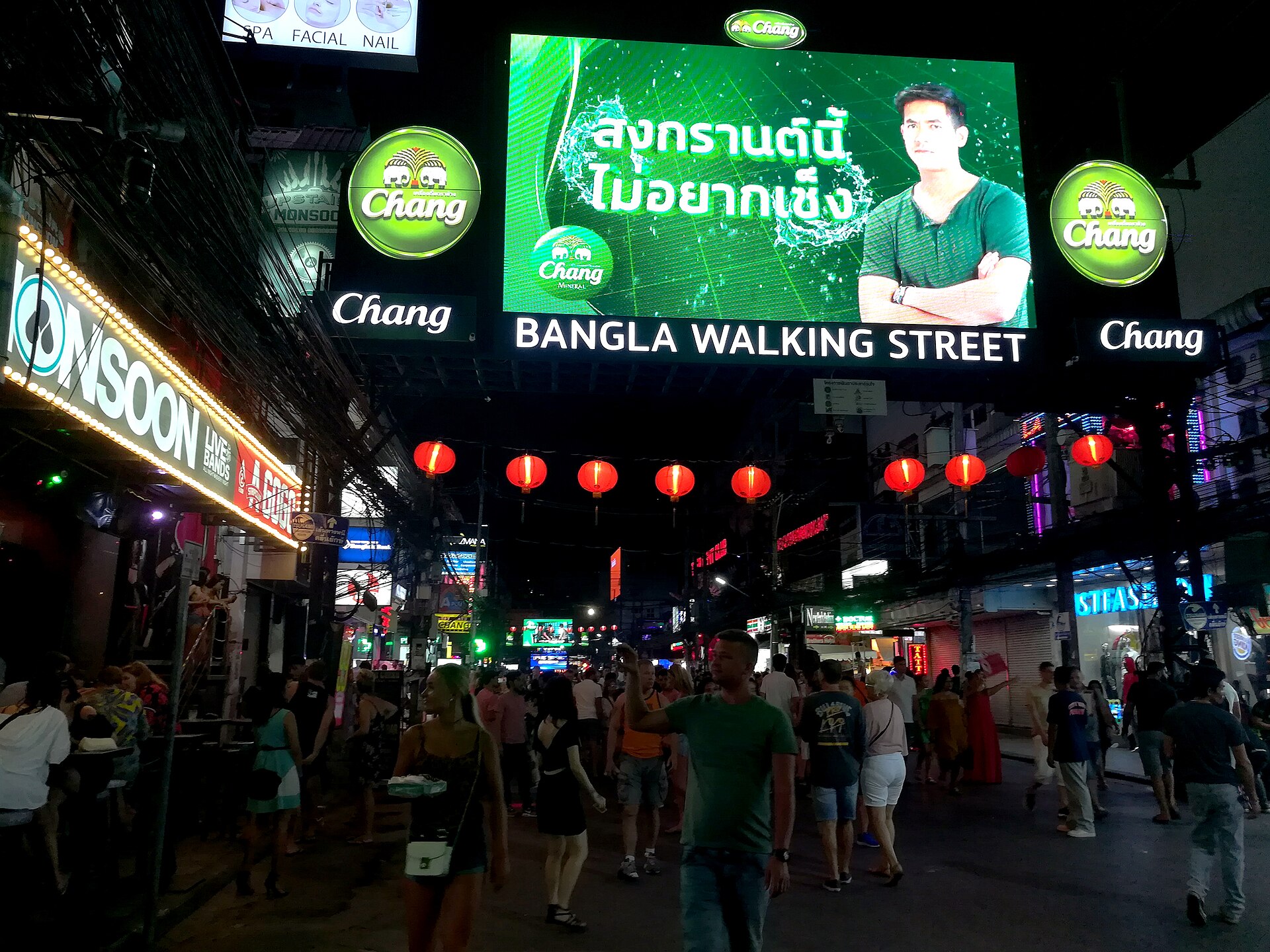
Phuket is not a dangerous place to visit, and most trips here are completely uneventful.
Short answer: Phuket safety
- Biggest real risk: road safety on a rented motorbike or scooter
- Costs you money: jet ski/rental “damage” claims and taxi overcharging
- Costs you time, not money: timeshare pitches and “this place is closed” redirects
- Who to call: 191 police, 1669 medical, 1155 Tourist Police
In this guide (click to expand)
In this guide
Phuket safety: road risk is what matters most
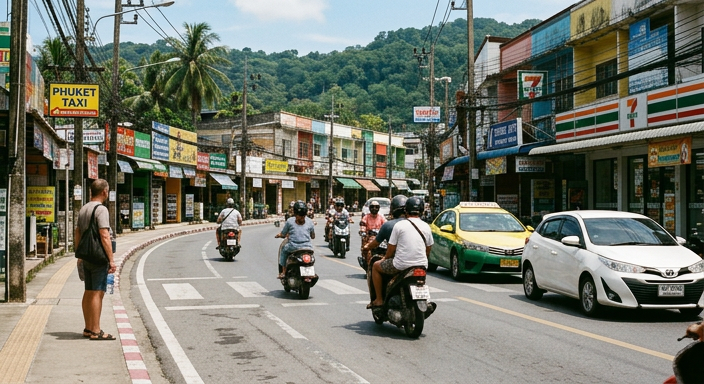
This is the one worth taking seriously, more than any scam on this page. The WHO ranks Thailand among the world’s deadliest countries for motorcycle fatalities, and Phuket specifically has a well-documented, ongoing problem with tourists on rented bikes. Two recent, dated data points make the scale clear: Phuket police fined more than 20,000 foreign nationals in 2025 for driving without a valid licence — the single most common traffic offence recorded on the island that year — and during the first six days of the 2026 Songkran road-safety campaign alone, the island recorded 28 crashes, with motorbikes involved in roughly 93% of them and a lack of helmet use contributing to over a third of deaths.
An earlier, often-cited figure — over 500 tourist motorbike accidents in a two-month period with around 80% of riders unlicensed — comes from a February 2023 report; treat it as historical context for how long this has been a known problem, not a current-year statistic.
What actually reduces your risk:
- You generally need an International Driving Permit alongside your home license to legally ride or drive in Thailand — not just your home license alone, and not something you can buy locally. The exact requirement (which IDP format is recognized, and whether your home license even qualifies you to apply for one) depends on your home country and the vehicle category, so check with your own country’s licensing authority or motoring association before you travel rather than assuming one standard applies to everyone.
- A helmet is legally required, for rider and passenger, and it meaningfully reduces injury severity, not just avoids a fine.
- Many tourist-rental scooters are unregistered and technically not road-legal — this matters for insurance as much as for the law.
- Check your travel insurance’s small print before you ride anything. Policies commonly exclude claims if you weren’t legally licensed for that vehicle in your home country, or if the engine size exceeds what your license covers. An accident without valid cover can mean paying for your own treatment and any damage, on top of the injury itself.
- If you don’t already ride a motorbike confidently at home, Phuket’s unfamiliar roads, mixed traffic and hot, exhausting conditions are not the place to learn. A Grab car or taxi costs more per trip and removes the need to operate a motorbike yourself — the biggest single factor in the statistics above — though normal road risk as a passenger in any vehicle doesn’t disappear entirely. Still worth weighing against the convenience of having your own wheels, especially for a short trip.
If you do rent, treat a valid, recognized driving permit and a genuine helmet as non-negotiable, not optional extras — this one habit does more for your Phuket safety than anything else on this page.
Good for
Confident riders at home with a valid International Driving Permit, a real helmet, and insurance that covers it
Skip the scooter if
You don’t already ride at home, don’t have an IDP, or this would be your first time on two wheels — take a Grab or taxi instead
The scams that actually cost real money
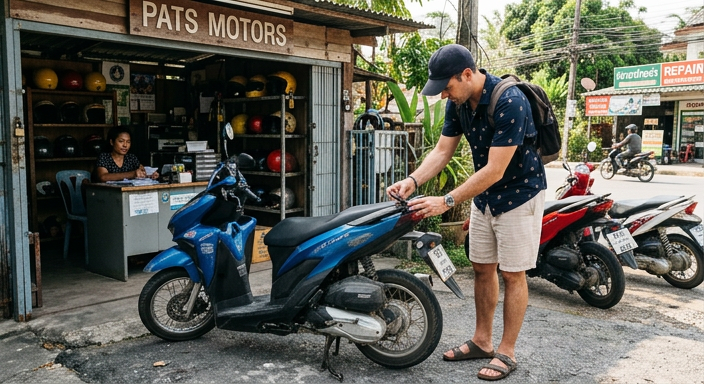
Jet ski and vehicle rental “damage” claims. You return a rented jet ski, motorbike or car, and the operator points to a scratch or dent that wasn’t there when you picked it up — then demands cash, sometimes a large sum, before you can leave.
- Photograph the vehicle from all angles before you ride or drive off, timestamped, including any existing damage — good Phuket safety practice for any rental dispute.
- Never hand over your passport as a deposit. Offer cash instead, and if the operator insists on your passport and won’t budge, rent from someone else.
- If a damage claim happens: stay calm, don’t agree to an on-the-spot cash payment under pressure, ask the operator to put the claimed damage and amount in writing, and call the Tourist Police (1155) before paying anything you’re not sure about. If you do end up paying a small disputed amount just to end a standoff safely, keep your photos and any receipt — they matter for a later report or insurance claim.
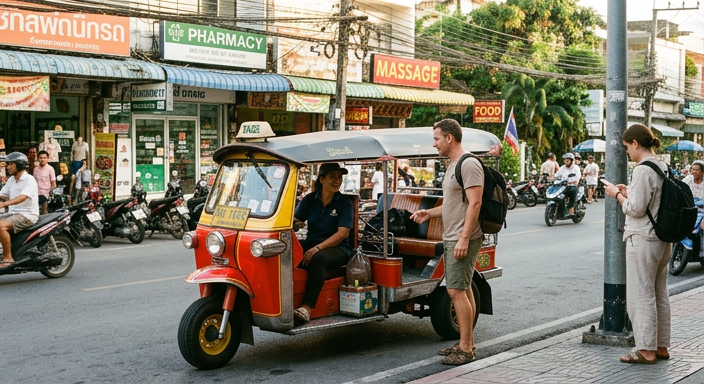
Taxi and tuk-tuk overcharging. Phuket fares are genuinely higher than in Bangkok or Chiang Mai, and metered taxis are hard to find outside the airport rank.
- Agree the fare before you get in, and confirm whether it’s for the ride or per person — a basic budget habit.
- Apps like Grab show you a price before you book, which avoids the negotiation entirely for most point-to-point trips.
- If you are overcharged for a short ride, it’s usually safer and less stressful to pay and move on than to argue at length — save the dispute energy for something that’s actually worth it, like a rental damage claim.
Scams built around your time, not your wallet
Timeshare surveys and scratch cards. Someone on the street or beach offers a quick survey or a scratch card, you “win” a prize, and collecting it means sitting through a high-pressure timeshare presentation. Most people lose an afternoon rather than money. Decline the survey itself if you’re not interested in a holiday-club pitch.
“This place is closed” redirects. Near some attractions, someone will tell you it’s closed today and offer to take you somewhere better — usually a shop that pays them commission. Check opening hours with your hotel rather than taking a stranger’s word for it.
Tuk-tuk “free ride” detours. A very cheap or free fare sometimes comes with unscheduled stops at gem or souvenir shops where the driver earns a commission. Unless you actually want to shop, it adds hours for little benefit.
Fake TDAC and visa-processing websites. Thailand’s arrival card is free and only submitted at the official government site — any other site, app, or “visa expediting” service charging a fee for it is exploiting the same confusion as any other scam here. See our Thailand visa and entry guide for the real process.
Smaller things worth knowing
- ATM skimming: uncommon but not unheard of — check the machine before you use it. If a card slot or keypad looks tampered with, use a different machine and watch your bank app for anything odd — it takes seconds.
- Card swipe fraud: stay within sight of your card during payment, especially somewhere quiet; a small habit that avoids a bigger headache later.
- Wrong change: worth a quick count at small shops, especially with a large note.
- Drink spiking: rare, but real enough to take the standard precaution — don’t accept open drinks from strangers, and keep an eye on your own glass at bars and beach clubs.
- Inflated nightlife bills: at bars without clearly posted prices, confirm the cost of a round before you order, particularly for anything bought for you by someone you’ve just met.
- Beach chair and umbrella disputes: some stretches of beach have informal “zones” run by vendors who charge for a chair or umbrella you didn’t think you were renting. Ask the price before you sit down, and treat a free-looking spot as free only once you’ve confirmed it with whoever is nearby.
None of this is specific to budget or luxury travel — Phuket safety basics affect backpackers and resort guests about equally.
Who to call: Phuket safety numbers that matter
Good Phuket safety habits include knowing who to call before you need to: Thailand has separate numbers for separate situations, and knowing which one to use saves time in a genuine emergency:
- 191 — Police (general emergencies). Use this for anything urgent: a crime in progress, a threat to your safety, or a situation you can’t resolve yourself.
- 1669 — Medical emergencies. Use this for an injury, accident, or anything needing an ambulance — including a motorbike accident, the single biggest Phuket safety risk covered on this page.
- 1155 — Tourist Police. English-speaking, 24/7 (expect it busier December–March), and the main Phuket safety contact for visitors. This is the right number for scam disputes, a rental damage standoff, theft reports, and anything else that needs a formal report. Calling the hotline itself doesn’t automatically produce the signed, stamped document insurers ask for — for that, you’ll typically still need to go in person to a police station to file the report, with the Tourist Police able to help with language and the process.
For a theft or scam report, bring your passport (or a copy) and anything you have — photos, receipts, witness details. Processing time varies by situation and how busy the office is, so don’t assume it will be quick — part of ordinary bureaucracy, not a sign anything’s wrong. Phuket’s main Tourist Police office is on Chalong Bay Road, south of Chalong Circle; there’s also a patrol presence near Bangla Road in Patong and in the airport arrivals hall during high season.
Checking a business before you book: the Tourist Police run an official portal, trust.touristpolice.go.th, to verify tourism service providers and check suspicious links before you pay anyone. Worth bookmarking before your trip, not just after something goes wrong.
If you’re still deciding where to base yourself, staying somewhere well-lit and central makes a lot of this easier by default.
While you’re at it, a few popular Phuket excursions are worth booking ahead too.
Related Phuket guides
- Getting Around Phuket
- Renting a Car in Phuket
- Thailand Visa and Entry Requirements for Phuket
- Phuket Travel Checklist
FAQ
Is Phuket safe for solo travelers, including women?
Yes, broadly — Phuket is a major, well-established tourist destination, and most visitors have no safety issues beyond what’s covered here. Ordinary precautions cover most of Phuket safety for solo travelers: well-lit areas at night, not leaving drinks unattended, and agreeing transport fares upfront.
Is renting a scooter in Phuket a bad idea?
Not automatically, but it’s the single biggest real risk on this page, not a scam. If you hold a valid license for a motorbike at home, bring your International Driving Permit, wear a real helmet, and check your insurance covers you — the risk drops a lot. If any of those don’t apply, a taxi or Grab is the safer call.
What if a vendor or driver gets aggressive over money?
Don’t escalate — this is where Phuket safety sense matters most. Move to a public area, pay a small disputed amount if it ends things safely, and call 1155 afterward if you want it on record — especially if a rental deposit or your passport is being held.
Does this mean I shouldn’t rent a car?
No — most rentals are completely fine. Judge the company by the whole picture, not one detail: a clear written contract, proper insurance, the vehicle’s condition documented before you drive off, and transparent deposit terms — a company like Localrent, which lists these upfront, is the kind of standard to look for. A cash-instead-of-passport deposit policy is one good sign among several, not a guarantee on its own.