This guide contains affiliate links. If you book through them, we may earn a commission at no extra cost to you. Read our disclosure.
Much of the best food in Phuket is in Phuket Town, not on the beach. The island’s own cooking is Hokkien Chinese, Peranakan and southern Thai: thick wok-fried noodles, pork belly braised in dark soy, crab curry on rice noodles, dim sum for breakfast and roti cooked on a griddle. Much of it is served in small shophouse restaurants and market stalls, where breakfasts, noodles and street snacks often cost 30 to 90 baht, and a lot of it is finished by early afternoon.
That is also the catch. Beach areas have plenty of restaurants, but they are priced for visitors and often cook the same pad thai and fried rice you can eat anywhere in Thailand. If you want the real Phuket plate, plan at least one food morning in the Old Town, one night market and one seafood meal bought by weight, and know when each place is open. This guide gives 12 dishes with places to try them, a market calendar, how not to overpay for seafood, where to eat near each beach, and the best cooking classes and food tours.
In this guide (click to expand)
Best food in Phuket at a glance
| When | What to eat | Where |
|---|---|---|
| Early morning | Dim sum, roti, pathongko | Old Town shophouses |
| Late morning to lunch | Hokkien noodles, crab curry, moo hong | Old Town, Talat Yai and Talat Nuea |
| Afternoon | Coffee and sweets, a short break | Old Town cafés |
| Evening | Night markets, o-tao, seafood by weight | Markets, Rawai, Chalong, Old Town |
| Late night | Rice porridge | Old Town |
Prices below are approximate and change, and many small places do not keep fixed hours: some close at midday, some on one weekday. Go earlier than you think.
What makes Phuket food different
Phuket is an old trading port. Hokkien Chinese settlers brought noodles, dim sum and braised pork, Peranakan families blended Chinese and Malay cooking, and the southern Thai kitchen added hot, sour curries with crab and fish. Muslim cooks add roti and curries to the morning. That mix is the reason a morning in the Old Town can cover four cuisines within a few blocks.
It also changes how you eat. Dim sum and roti are breakfast food, noodle shops close in the afternoon, and the best seafood is bought by weight. A day built around three restaurant meals will miss most of it, and a day built around markets, noodle shops and one proper dinner will not.
12 local dishes and where to eat them
Place names follow popular local guides and Michelin mentions. Spelling varies, and some stalls move or close, so treat each place as a starting point and check the sign.
| Dish | What it is | Try it at |
|---|---|---|
| Hokkien mee | Thick yellow noodles stir-fried in dark soy with pork and seafood | Go La (about 60 to 80 baht, since the early 1900s), Mee Ton Poe (since 1946), Lock Tien food court |
| Moo hong | Pork belly braised in soy, garlic and pepper | One Chun, Tu Kab Khao (about 265 baht) |
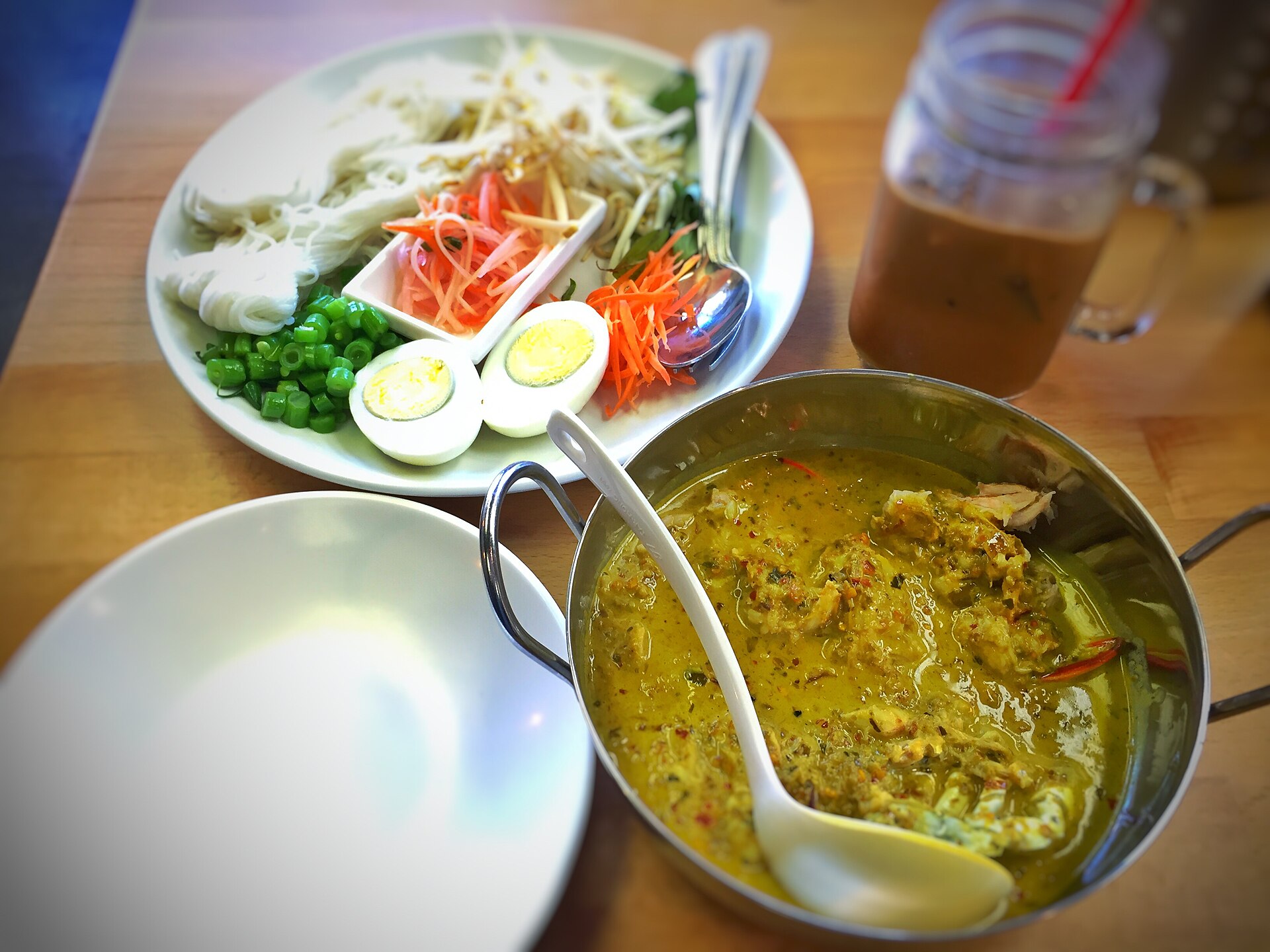
| Crab curry (kang pu) | Thick crab curry, served with rice or noodles | Raya, Jadjan by Ko Daeng (about 300 baht), One Chun |
| Kanom jeen | Fermented rice noodles with curry and fresh herbs | Local noodle shops, often with crab curry |
| Gaeng som pla | Sour yellow curry with fish | Tu Kab Khao (about 180 baht), Ko Tee Sangkasi |
| O-tao | Taro, egg and oysters fried on a griddle | O Tao Bang Niao (evenings) |
| Lo ba | Fried pork offal and tofu in five-spice sauce | Loba Bang Niao (daytime) |
| Rice porridge | Fish porridge or dry rice porridge with pork | Hong Khao Tom Pla (evenings), Go Benz (Tue to Sun, about 5 pm to 1:30 am) |
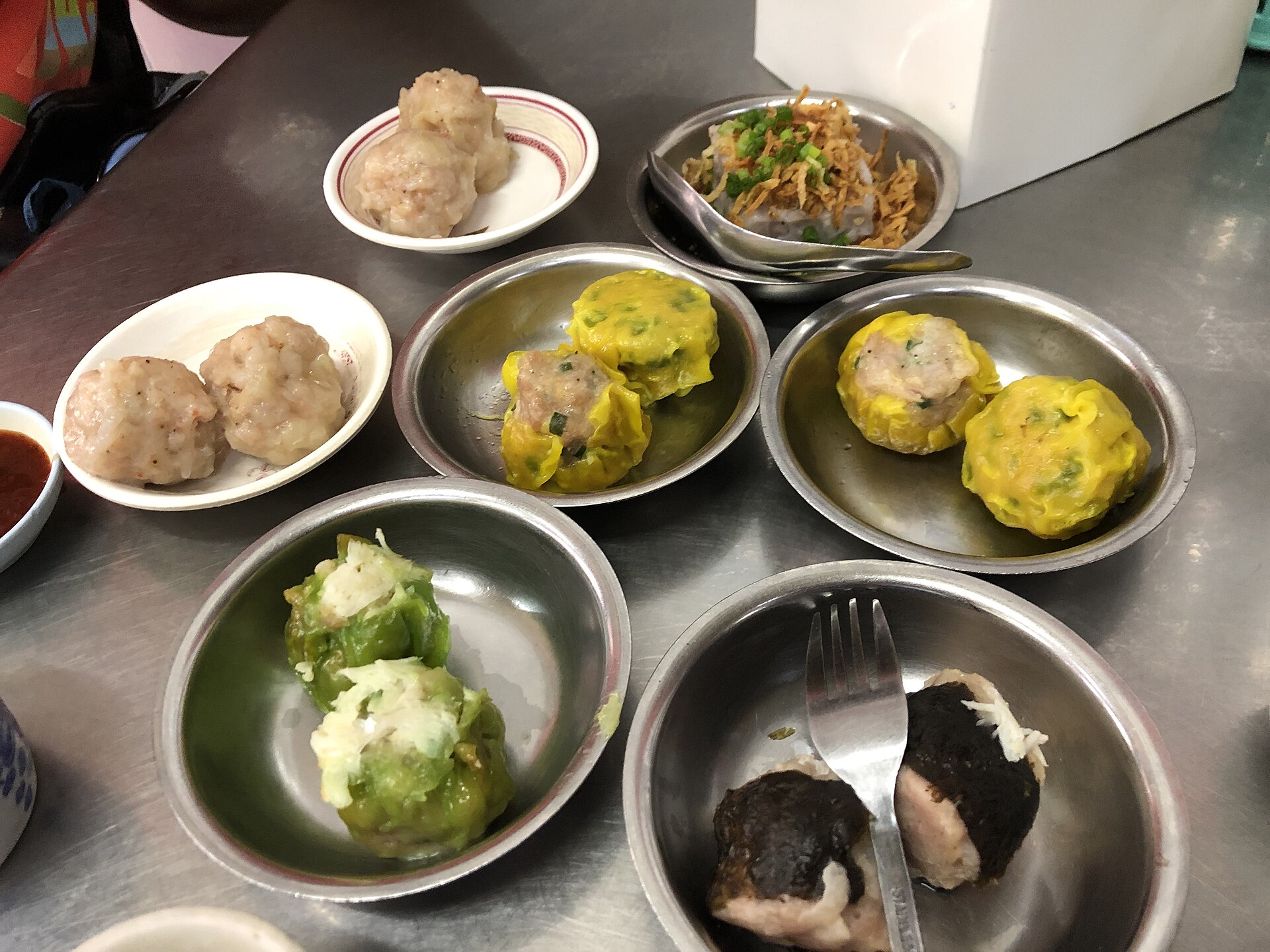
| Dim sum and pathongko | Steamed dumplings, buns and fried dough sticks | Chuan Heang, Pathongko Mae Pranee (queue from about 6 am) |
| Roti | Flat bread griddled and served with curry | Roti Taew Nam (plain roti from about 20 baht), halal Roti Chaofa |
| O-aew | Shaved-ice dessert with translucent jelly, syrup and often red beans, rooted in Hokkien food culture | Tian Tian Phuket Dessert Cafe, Wanlamun, Torry’s Ice Cream |
| Khanom a-pong | Small coconut pancakes cooked on charcoal | A-Pong Mae Sunee (cash only, until sold out) |
A few notes make the table work in practice.
Noodles. Hokkien mee is the dish to start with. Go La and Mee Ton Poe are old family places in the Old Town, and the plates are cheap enough to try two on one morning. Go La is open Tuesday to Sunday, about 11 am to 8 pm, while many other noodle shops close in the afternoon, so check each place’s hours.
Pork and curry. Moo hong is rich, so share it. The crab curries are the most expensive dishes on this list but are best eaten in a shophouse rather than a beach restaurant. If you want a sit-down meal that is Phuket and not a copy of a Bangkok menu, One Chun and Tu Kab Khao are the usual starting points.
Breakfast. Chuan Heang serves dim sum from about 6 am to 11:30 am, with most dishes about 30 to 50 baht. Roti with curry is another morning staple, and the halal Roti Chaofa has goat curry that tends to sell out early.
Late night. Go Benz is open Tuesday to Sunday from about 5 pm to 1:30 am, cash only, with most dishes around 50 to 90 baht. Hong Khao Tom Pla can have a 30 to 40 minute wait on busy nights.
Sweets. O-aew is a refreshing Phuket dessert made with translucent jelly, shaved ice, sweet syrup and often red beans, with roots in the island’s Hokkien Chinese food culture. Try it at Tian Tian Phuket Dessert Cafe on Phang Nga Road, at Wanlamun in Talat Yai, or at Torry’s Ice Cream on Soi Romanee. A-Pong Mae Sunee covers the morning side, with small coconut pancakes cooked on charcoal.
A food day in Phuket Old Town
The Old Town is the one place where you can eat well all day on foot. It also works for a first morning, because most places are within a short walk and menus are cheap.
- 6 to 9 am: dim sum at Chuan Heang or a roti breakfast. Eat early, because both thin out by late morning.
- 11 am to 1 pm: Hokkien mee at Go La (open from 11:00) or Mee Ton Poe, then crab curry or moo hong at a southern Thai restaurant. If you only have room for one, make it the noodles.
- Afternoon: walk the shophouses and murals, then coffee. The Phuket Old Town guide has a walking route.
- Evening: o-tao or a rice porridge, or the Sunday Walking Street on Thalang Road.
If you want a guide who knows the shops, a food tour covers a lot of the list in one go. These are available on GetYourGuide:
Night markets and street food by day
Markets are the cheapest way to eat. Most open in the late afternoon and run into the evening, and each day of the week has a different one.
| Market | Where | When |
|---|---|---|
| Lard Yai Sunday Walking Street | Thalang Road, Old Town | Sundays, about 16:00 to 21:00 |
| Chillva Market | Phuket Town | Mon to Sat, about 17:00 to 23:00; closed Sundays |
| Naka Weekend Market | Phuket Town outskirts | Saturdays and Sundays, from about 16:00 |
| Kata Night Market | Kata | Daily, about 14:00 to 23:00 |
| Karon Temple Market | Karon | Tuesdays and Fridays, about 16:00 to 22:00 |
| Malin Plaza | Patong | Daily, about 14:00 to midnight |
| Fun Friday Market | Boat Avenue, Bang Tao | Fridays, about 17:00 to 22:00 |
| Rawai local market | Rawai | Mondays and Thursdays |
The best first market is Lard Yai on a Sunday, and Chillva on any other evening. Street stalls are generally cash only, and street food is at its best from about 6 pm to 9 pm.
Seafood without overpaying
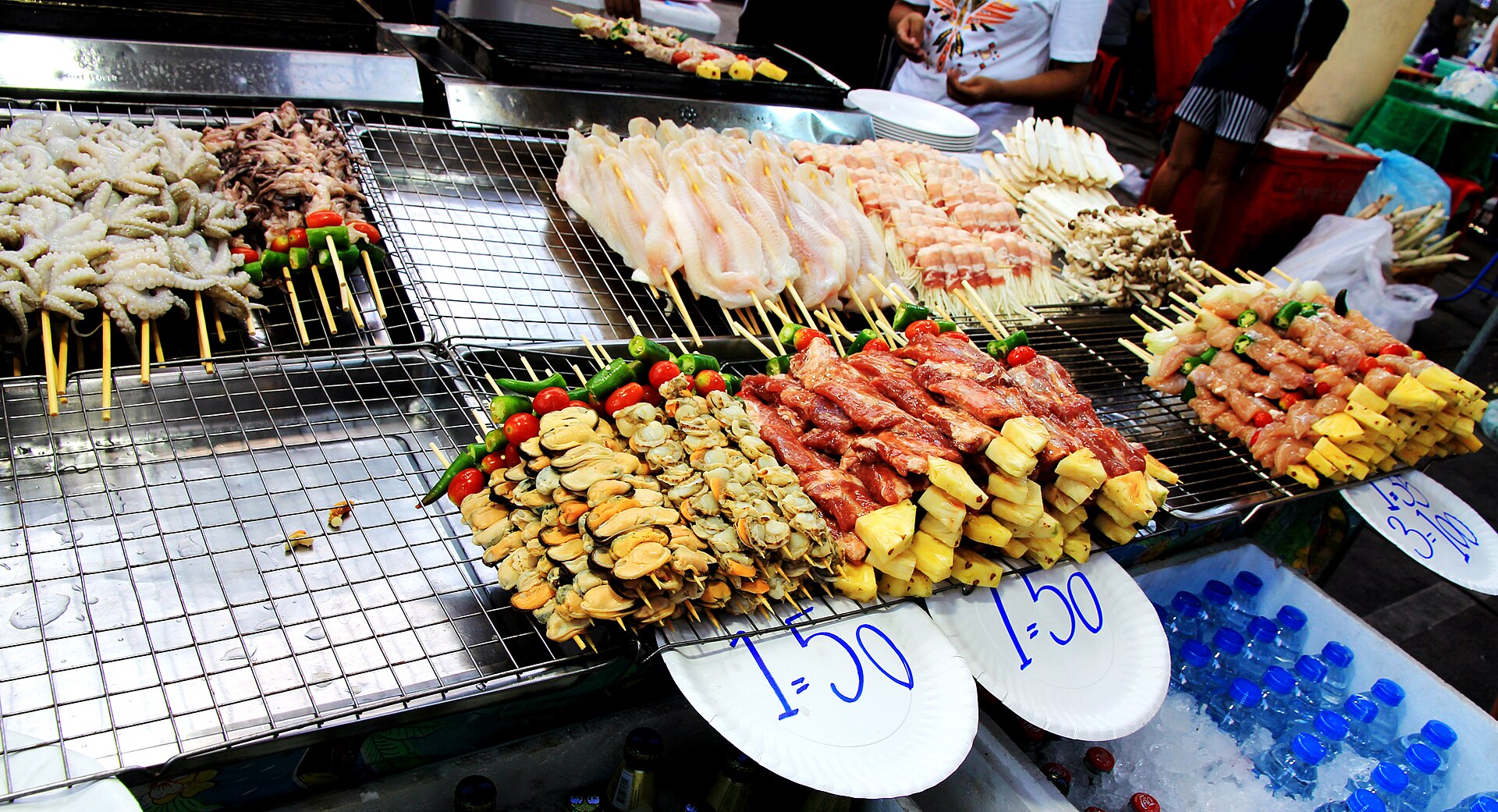
Seafood is the one place on the island where the price depends on how you order. Three rules save money.
- Buy by weight, not by plate. At a market or a restaurant that sells fish by weight, confirm the weight, the price per kilo and the cooking charge before anything is cooked.
- Compare per kilo. Check whether a price is per kilo or per 100 grams, and ask at two places before you sit down.
- Skip the tourist stalls. Stalls aimed at passing visitors raise prices quickly, and a posted price per kilo is a good sign.
The best-known version is the Rawai seafood market, where you choose the fish and a restaurant across the road cooks it for a fee per kilo. Go around 11:30 for the best selection. The Nai Harn and Rawai guide explains the area. Kan Eang@Pier is by Chalong Pier and is listed at roughly 300 to 500 baht a dish. On the east coast, Laem Hin Seafood in Ko Kaeo faces Coconut Island and charges by weight per 100 grams, for example about 360 baht for a salt-crust grilled fish. In Phuket Town, Chaiyo Seafood sells black crab at about 480 to 590 baht a kilo, and Ko Ang Seafood opens from about 6 pm and is worth booking on weekends.
If you would rather go with a guide, this evening tour ends with dinner at the Rawai seafood market:
Where to eat by beach area
You do not have to leave the beach for good food, but the choice changes by area.
- Kata and Karon: the daily Kata night market and the Karon Temple Market (Tuesdays and Fridays) are the cheap options. For a view and a nicer dinner, Mom Tri’s Kitchen at Kata Noi is roughly 800 to 1,500 baht per person. Read where to stay in Kata and where to stay in Karon.
- Patong: the widest choice and the weakest value. Bangla Road pad thai stalls can charge 150 to 250 baht for a small portion. Walk two blocks back from the beach and prices drop. Malin Plaza is the better street-food choice. See where to stay in Patong.
- Kamala, Surin and Bang Tao: beachside and hotel restaurants can run from about 500 baht a dish upward, and the Fun Friday market at Boat Avenue is the budget option. See where to stay in Bang Tao and where to stay in Kamala.
- Nai Harn and Rawai: simple Thai restaurants near the beach, plus the Rawai seafood market. This is the best part of the island for buying seafood by weight.
If food is the point of your trip, a base in or near the Old Town beats any beach resort, because you can eat well on foot at all hours.
Vegetarian and halal food
Phuket’s vegetarian tradition is strong, helped by the Vegetarian Festival every October, when the Old Town fills with stalls and Jui Tui Shrine hosts the main ceremonies. During the festival, look for yellow flags with a red Thai character (เจ, pronounced jay): they mark jay food, a strict plant-based style with no meat, fish or dairy. Throughout the year, Jia Chai and Nong J serve vegetarian dishes from about 50 baht a plate.
Outside those places, do not assume that a dish without meat is vegetarian. Many Thai dishes are made with fish sauce, oyster sauce or shrimp paste, so say what you avoid and ask for a vegetarian version. “Kin jay” is a common phrase for asking for jay food, and many noodle and fried rice stalls will adapt a dish if you ask.
For halal food, look for Muslim roti shops in Phuket Town such as Roti Chaofa, which sell out early and close one day a week, so check before you go.
Cooking classes and food tours
A cooking class is the best way to bring Phuket home. A popular half-day option is the Phuket Thai Cooking Academy class: about 3.5 hours in total, with a 45-minute visit to Kathu Fresh Market and a two-hour cooking session where you choose four dishes. The academy lists 2,300 baht per person (about US$69 on GetYourGuide), with free pickup in Patong, Phuket Town and Kathu. Groups of three or more get free transport anywhere on the island, while one or two guests outside the free zone pay 400 baht each. Check the current price and pickup area when you book.
Book a class early in your trip so you can use the recipes afterwards. For the Old Town itself, a guided food tour (above) is the faster way to taste a dozen dishes in one evening.
When to splurge
Phuket has a serious high-end scene. Blue Elephant serves royal Thai food in a restored mansion in the Old Town for about 1,500 baht a person before drinks, Royd’s 2026 tasting menus are 3,290 baht++ for five courses and 3,950 baht++ for eight, and BaBa Lee at Baba Mansion serves a Peranakan dinner from Thursday to Monday, by reservation, at 4,800 baht++ per person (the ++ means service charge and tax are added). PRU at Trisara is listed as the island’s Michelin-starred restaurant, with tasting menus above 3,500 baht. The Michelin Guide Thailand lists the Bib Gourmand and starred restaurants. Book any of these ahead.
Money and etiquette tips
- Cash. Stalls and small shophouse restaurants are mostly cash only.
- Prices. Look for posted prices, and ask the price before you order anything sold by weight.
- Water. Tap water is not safe to drink. Bottled water is about 10 to 20 baht at convenience stores.
- Timing. Many places close in the afternoon or on one weekday, so check the day, and go early to popular stalls.
- Sharing. Order several dishes for the table and share.
Where to stay for food
If the Old Town is your priority, stay in or near Phuket Town, because the best breakfast and lunch places are there and the beaches are a short ride away. If you prefer the beach, choose a base with a night market nearby. The map shows hotels around Phuket Town; zoom to your area.
For the whole island, see where to stay in Phuket, the things to do in Phuket guide and the Phuket 5-day itinerary, and read getting around Phuket for how to reach the Old Town from the beach.
Before you go
Flying in? Compare flights on Trip.com, then add cover for the trip.
Notes. Prices, opening hours and market days change, so check before you go. Restaurant listings are examples, not an exhaustive or ranked list. Prices and availability on partner sites change, so check the final price before you book.
Best food in Phuket: FAQ
What is the best food in Phuket?
Hokkien mee noodles, moo hong (braised pork belly), crab curry, dim sum for breakfast and fresh seafood. Most of the best versions are in Phuket Old Town, not at the beaches.
What is Phuket’s most famous dish?
Hokkien mee is the dish most often named, a plate of thick yellow noodles stir-fried in dark soy with pork and seafood. Moo hong and crab curry follow.
Where should I eat in Phuket on a budget?
At the Old Town noodle shops, dim sum and roti breakfast places and the night markets. Breakfast places, noodle shops and markets often charge 30 to 90 baht a dish.
Is Phuket seafood expensive?
It can be. Prices are by weight, so confirm the weight, price per kilo and cooking charge first.
Are there vegetarian options in Phuket?
Yes. The Old Town has vegetarian restaurants from about 50 baht a plate, and the Vegetarian Festival in October fills the town with stalls.
Is it worth taking a cooking class in Phuket?
Yes, if you like to eat as much as to travel. A half-day class with a market visit takes about 3.5 hours and lets you cook four dishes of your choice.